Published October 29, 2026 by Campus Information Office
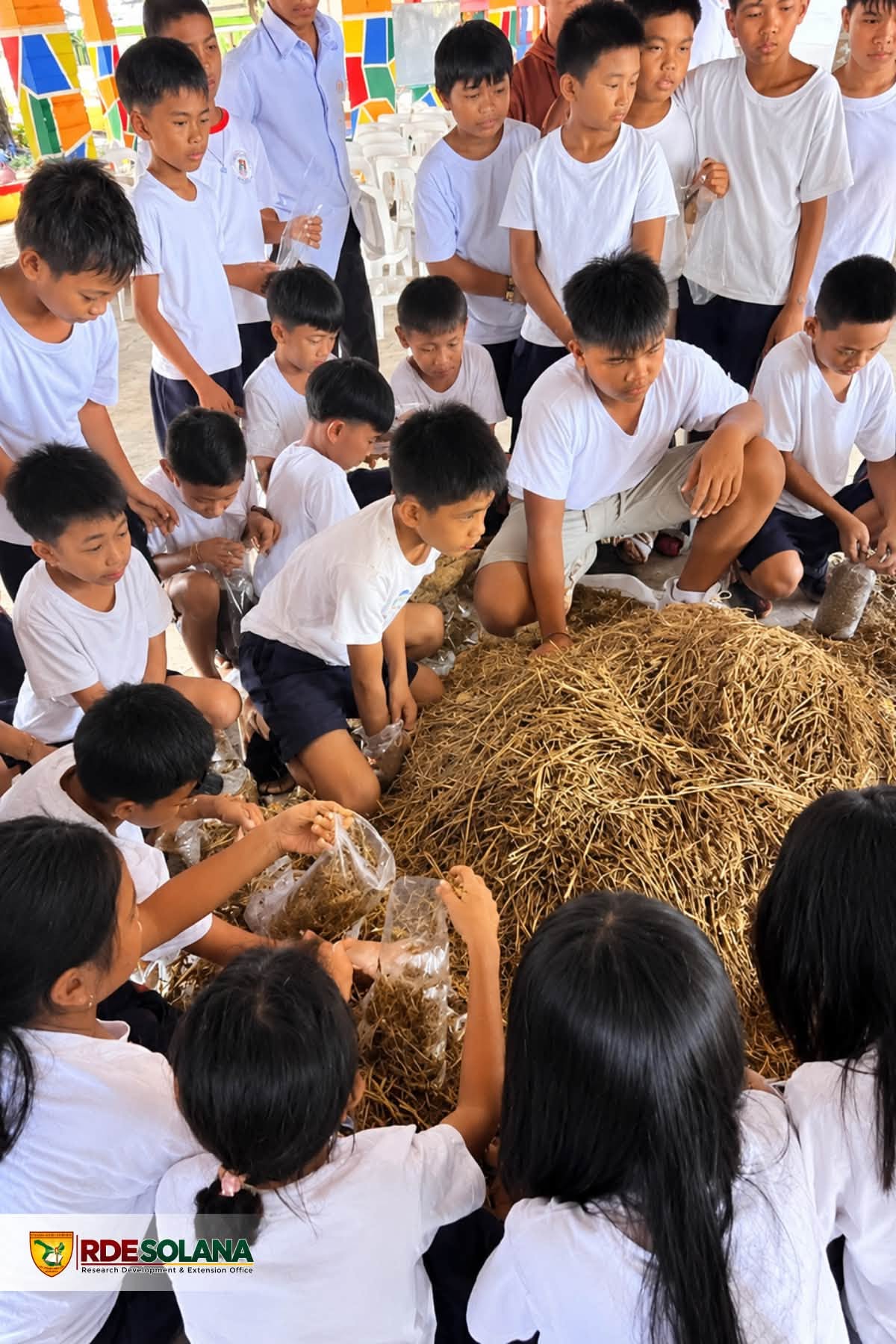
Eight teachers and forty-seven learners of Andarayan Elementary School gained practical knowledge and hands-on experience in oyster mushroom production through a technical training facilitated by the College of Agriculture of Cagayan State University (CSU) Solana-Lara Campus on October 15, 2026.
The training introduced the participants to the essential processes of mushroom cultivation, equipping them with practical agricultural skills that can be applied in school-based activities and explored as potential livelihood opportunities.
Initiated by Andarayan Elementary School through a technical advisory arrangement, the activity was conducted under the university’s flagship extension project, Community Rice-Based Mushroom Production, which aims to transfer appropriate mushroom production technologies to local communities and promote sustainable, agriculture-based livelihood opportunities.
Faculty experts Mr. Jake P. Abedes and Mr. Romar Asuncion of the College of Agriculture facilitated the technical discussions, demonstrations, and hands-on exercises. Participants learned the key stages of oyster mushroom production, including substrate preparation, bagging and inoculation, incubation, fruiting management, pest and disease management, harvesting, and post-harvest handling.
The discussions also covered basic production costing and marketing, providing participants with an overview of the economic aspects of mushroom cultivation. The trainers likewise highlighted ways to integrate mushroom production into Edukasyong Pantahanan at Pangkabuhayan (EPP) lessons and school activities, connecting classroom instruction with practical agricultural applications.
Through the initiative, CSU Solana-Lara Campus continues to extend its agricultural expertise to basic education institutions, providing teachers with additional instructional resources and exposing young learners to sustainable farming practices and potential livelihood ventures.
The activity underscores the importance of experiential learning in developing practical competencies among young learners while introducing agriculture as a viable avenue for future livelihood and community development.