Published October 30, 2026 by Campus Information Office
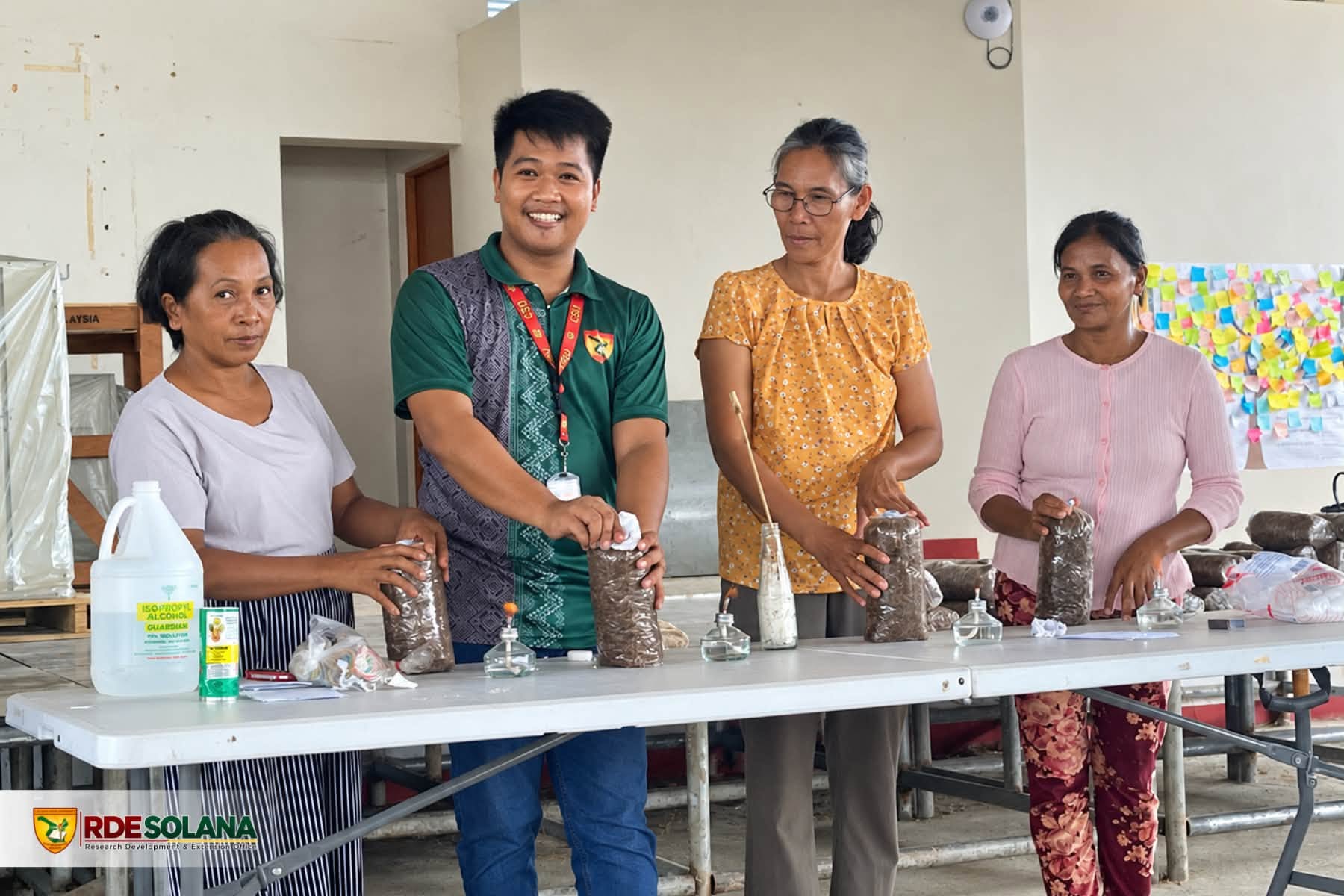
Members of the Samahan ng mga Magsasaka ng Sitio Pacu, Maguirig strengthened their technical knowledge and practical skills in rice-based oyster mushroom production through a skills enhancement training facilitated by Cagayan State University (CSU) Solana-Lara Campus on October 22, 2026, at the Kaunlaran Gymnasium of CSU–Solana Campus in Iraga, Solana, Cagayan.
The training aimed to equip local farmers with improved production techniques and address common challenges in mushroom cultivation, supporting the development of a sustainable, community-based mushroom enterprise.
Faculty experts Mr. Jake P. Abedes and Mr. Romar Asuncion of the College of Agriculture led the lectures and hands-on demonstrations, covering common production mistakes, rice-based substrate preparation, spawn quality assessment, fruiting management, pest and disease control, and proper harvesting and post-harvest handling.
Through the practical sessions, participants gained insights into applying appropriate cultivation techniques to improve mushroom quality and minimize production losses. An open forum also provided farmers with an opportunity to raise concerns, share their experiences, and discuss challenges encountered in managing their respective mushroom-growing facilities.
The activity served as a follow-up to the association's previous training on entrepreneurship and organizational development, which focused on preparing its members to collectively organize and manage mushroom production as a group enterprise. The latest training further strengthened the technical foundation necessary to translate their organizational and entrepreneurial preparations into actual production activities.
The initiative forms part of CSU–Solana's flagship extension project, Community Rice-Based Mushroom Production, which seeks to transfer appropriate agricultural technologies to farming communities while promoting the productive utilization of rice-based agricultural materials.
Through the continuing implementation of the project, CSU–Solana reinforces its commitment to strengthening farmers' technical and livelihood capacities, encouraging resource-efficient agricultural practices, and creating opportunities for community-based enterprise development.